
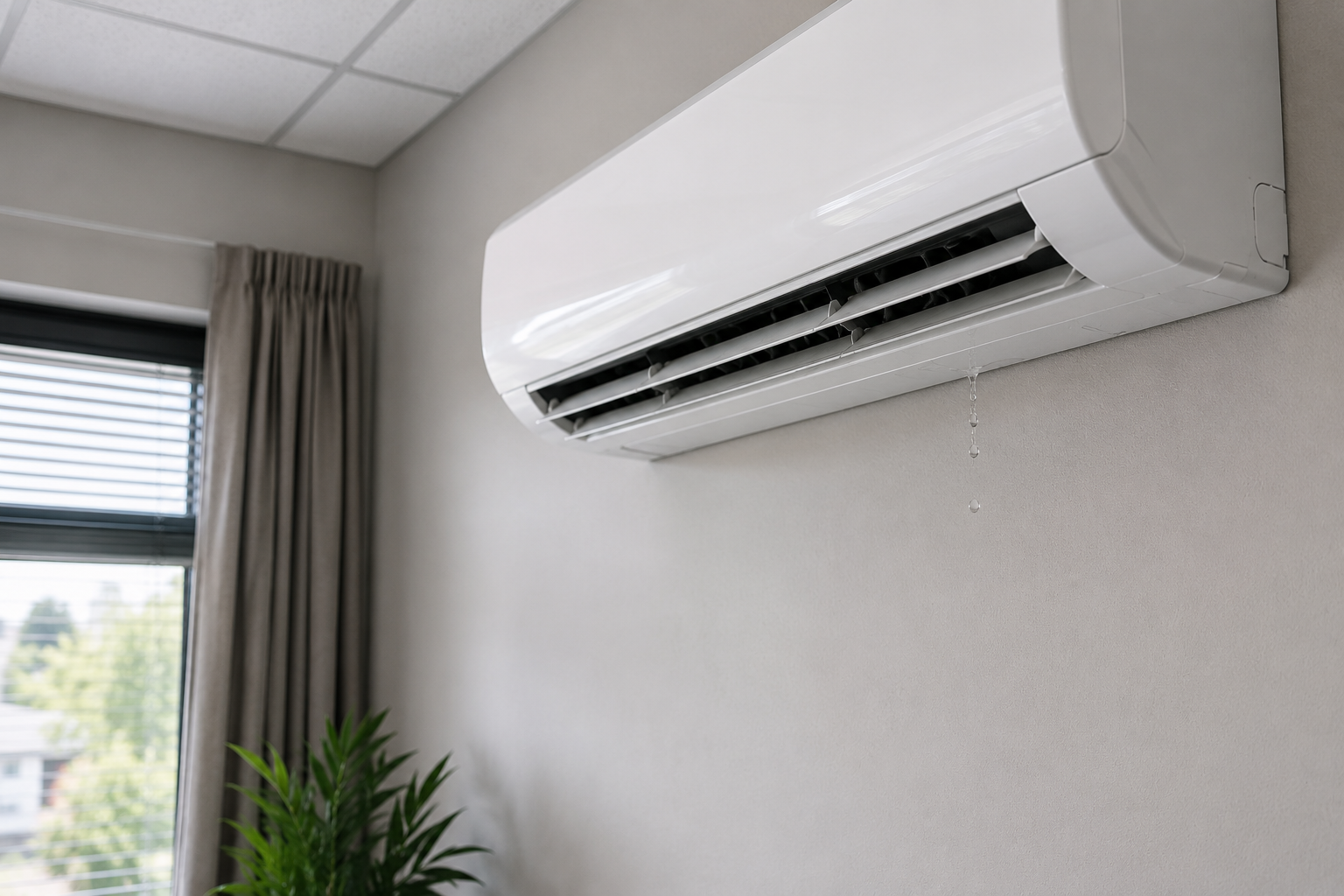
An air conditioner leaking water inside your home, office or commercial building is never normal. While many people assume a small leak is harmless, indoor water leakage is usually a sign that something inside the HVAC system is no longer working properly. In some cases, the issue may begin with something relatively simple, such as a blocked drain line or dirty filter. In other situations, leaking water may indicate frozen coils, refrigerant problems or installation issues that can eventually lead to major repairs.
Many property owners first notice water stains on walls or ceilings near the indoor unit. Others realise there is a problem when water starts dripping directly from the air conditioner onto furniture, flooring or office equipment. Some systems may even stop cooling properly at the same time the leak appears.
Ignoring indoor water leaks almost always makes the situation worse. Water damage can spread quickly through ceilings, walls and electrical areas while the HVAC system itself continues operating under strain. The longer the problem continues, the more expensive both the HVAC repairs and property repairs may become.
Understanding why an air conditioner leaks water indoors can help prevent unnecessary damage, improve system performance and reduce the risk of complete HVAC failure during Pretoria’s hotter months.
Request Professional Aircon Leak Repairs
Get fast and reliable aircon leak detection, servicing and repair solutions for residential and commercial systems in Pretoria.
Why Air Conditioners Naturally Produce Water
Many people are surprised to learn that air conditioners naturally create moisture during normal operation. As warm indoor air passes over the evaporator coils inside the system, condensation forms as part of the cooling process. This moisture is then collected and directed out of the system through a drainage line.
Under normal conditions, this process happens without any visible leaking indoors. Problems begin when drainage systems become blocked, airflow becomes restricted or internal HVAC components stop functioning correctly.
Pretoria’s warm climate can increase condensation production because air conditioners often operate continuously for long periods during summer. Commercial HVAC systems may produce even larger amounts of condensation because they cool larger environments throughout the day.
Once moisture can no longer drain away properly, water begins collecting inside the unit until it eventually leaks into the building.
Blocked Drain Lines Are a Major Cause of Indoor Leaks
One of the most common causes of indoor aircon leaks is a blocked condensate drain line. The drainage system is responsible for carrying condensation safely away from the indoor unit. Over time, however, dirt, algae, sludge and dust buildup can clog the pipe.
As the blockage worsens, water becomes trapped inside the system instead of draining correctly. Eventually, the excess moisture overflows from the indoor unit and begins leaking indoors.
This problem is especially common in systems that have not been serviced regularly. Dust and debris buildup inside neglected HVAC systems often combine with moisture and gradually form thick blockages within the drainage line.
Commercial systems can experience even larger drainage problems because they generate far more condensation during daily operation.
Common warning signs of blocked drain lines include:
- water dripping from the indoor unit
- musty smells near the air conditioner
- ceiling or wall stains
- excess moisture around the system
- intermittent leaking during operation
Routine HVAC maintenance usually includes drainage inspections and cleaning to help prevent these issues from developing.
Dirty Filters Can Lead to Frozen Coils
Dirty air filters are another major reason air conditioners begin leaking water indoors. When filters become clogged with dust and airborne debris, airflow through the system becomes restricted.
Restricted airflow prevents warm indoor air from circulating properly across the evaporator coils. As a result, the coils become excessively cold and may eventually freeze during operation.
Once the system switches off or temperatures change, the accumulated ice begins melting rapidly. The drainage system may then become overwhelmed by the sudden excess water, causing indoor leaks.
Many people do not realise that something as simple as a neglected filter can eventually lead to ceiling stains, water damage and reduced cooling performance.
Pretoria’s dry conditions often cause dust buildup to accumulate faster, especially in busy households, office environments or properties located near roads and construction activity.
Routine servicing helps maintain balanced airflow, improves cooling efficiency and reduces the risk of frozen evaporator coils.
Refrigerant Problems Can Also Cause Leaks
Low refrigerant levels can contribute to indoor water leaks because they affect pressure inside the cooling system. When refrigerant pressure becomes too low, evaporator coils may become excessively cold and begin freezing.
As the ice melts, water may overflow from the indoor unit and leak into the property.
Refrigerant issues usually develop gradually. Property owners often notice reduced cooling performance before visible leaking begins. The air conditioner may struggle to maintain temperature, take longer to cool rooms or produce weaker airflow than normal.
Unlike fuel, refrigerant does not simply run out naturally over time. Low refrigerant almost always indicates a leak somewhere within the system itself.
Some signs of refrigerant-related problems include:
- weak cooling performance
- ice buildup on indoor components
- warm airflow from vents
- longer cooling cycles
- hissing sounds near refrigerant lines
Continuing to operate an air conditioner with low refrigerant places heavy strain on the compressor and can eventually lead to much larger HVAC repairs.
Need Fast Aircon Leak Detection?
Our HVAC specialists diagnose indoor aircon leaks quickly and provide reliable repair and maintenance solutions.
Damaged Drain Pans Can Cause Water to Escape
The drain pan is responsible for collecting condensation before the water flows into the drainage system. Over time, older drain pans may rust, crack or deteriorate due to constant moisture exposure.
Once the drain pan becomes damaged, water begins leaking from areas that are no longer properly sealed. In many cases, this creates slow indoor leaks that gradually worsen over time.
Older air conditioning systems are more vulnerable to drain pan problems because years of continuous operation eventually weaken drainage components. Some property owners only discover the issue once ceiling stains or visible moisture damage appear around the indoor unit.
Commercial systems may experience similar problems when drainage infrastructure deteriorates after years of heavy use.
Professional HVAC inspections help identify damaged drainage components before serious property damage occurs.
Poor Installation Can Lead to Indoor Leaks
Improper air conditioner installation is another common reason systems leak water indoors. If the indoor unit is not installed at the correct angle, condensation may fail to drain properly through the pipework.
Instead of flowing away from the unit, water begins collecting inside the system until it eventually overflows indoors.
Incorrectly installed drainage piping can also create long-term problems. Pipes installed without proper slope or support may trap water, encourage blockages and increase the likelihood of indoor leaks later.
Installation problems are often more noticeable in newer systems that begin leaking shortly after installation.
Commercial HVAC installations require even greater precision because larger systems generate much higher volumes of condensation during daily operation. Incorrect drainage design in commercial buildings can eventually affect ceilings, walls and surrounding infrastructure.
Professional HVAC installation plays a major role in ensuring long-term drainage reliability and cooling performance.
Heavy Usage During Pretoria Summers Increases Pressure on HVAC Systems
Pretoria’s hot climate places heavy pressure on air conditioning systems throughout much of the year. During summer, many systems operate continuously for long hours every day.
The longer an air conditioner runs, the more condensation it produces. If airflow is already restricted or drainage systems are partially blocked, the increased moisture production may quickly trigger indoor leaking.
Commercial properties are especially vulnerable because office buildings, retail spaces and industrial facilities often rely on HVAC systems throughout the entire working day.
Without routine servicing, the combination of heavy usage and neglected maintenance eventually increases the risk of leaks, frozen coils and mechanical strain.
Why Indoor Aircon Leaks Should Never Be Ignored
Many people place buckets, towels or containers beneath leaking air conditioners while continuing to use the system normally. Unfortunately, this only addresses the visible symptom while allowing the underlying HVAC problem to worsen.
Indoor water leaks can eventually damage ceilings, walls, flooring and nearby electrical systems. Continuous moisture buildup also creates conditions that encourage mould growth and unpleasant odours inside the property.
The HVAC system itself may also suffer increasing damage as internal strain continues building over time.
Early diagnosis is usually far more affordable than waiting for both HVAC damage and structural property damage to become severe.
Residential and Commercial HVAC Leaks Are Different
Residential split units and commercial HVAC systems experience different drainage challenges because they operate under very different conditions.
Residential systems usually develop leaks because of dirty filters, blocked drainage lines or neglected maintenance. Since these systems are smaller, leaks are often noticed relatively quickly once water begins dripping indoors.
Commercial HVAC systems are more complex and generate significantly larger amounts of condensation during daily operation. Larger systems also rely on more advanced drainage infrastructure, ventilation systems and interconnected cooling zones.
Commercial leaking problems may involve rooftop drainage systems, condensate pumps, ventilation-related moisture issues or large-scale drainage blockages that affect multiple sections of the property.
Because of this complexity, regular preventative maintenance is extremely important for commercial HVAC reliability.
Why Preventative HVAC Maintenance Matters
Most indoor aircon leaks can be prevented through regular HVAC servicing and preventative maintenance.
Routine inspections allow technicians to identify drainage restrictions, airflow problems, refrigerant issues and developing component failures before serious leaking begins.
Preventative maintenance also improves overall system performance by maintaining proper airflow, balanced cooling and efficient operation throughout the year.
Neglected systems consume more electricity, cool less effectively and become far more vulnerable to leaks and expensive mechanical failures over time.
For commercial buildings, preventative HVAC maintenance is especially important because cooling failures can disrupt daily operations, reduce employee comfort and affect customers.
When Should You Call an HVAC Professional?
If your air conditioner is leaking water indoors, professional inspection should be arranged as soon as possible. Even small leaks usually indicate that something inside the HVAC system requires attention.
Delaying repairs allows water damage and internal mechanical strain to worsen over time. What may initially require simple maintenance can eventually develop into much larger and more expensive repairs.
Professional HVAC technicians can identify the exact cause of the leak, inspect internal components and recommend the most effective repair solution before additional damage occurs.
Whether the problem involves blocked drainage, frozen coils, refrigerant issues or installation faults, early servicing is usually far more cost-effective than emergency repairs later.
Proper Maintenance Helps Prevent Future Leaks
Air conditioners work hard throughout Pretoria’s warmer months, especially in commercial environments where HVAC systems operate continuously every day.
Without proper maintenance, drainage systems, airflow components and cooling systems gradually lose efficiency and become increasingly vulnerable to failure.
Routine HVAC servicing helps maintain reliable drainage, balanced airflow and efficient cooling performance while reducing the risk of indoor leaks.
Whether you own a residential split unit or manage a large commercial HVAC system, preventative maintenance remains one of the most effective ways to protect your property, improve cooling reliability and extend the lifespan of your air conditioning equipment.
Book Professional Aircon Maintenance Today
Keep your air conditioning system operating efficiently with expert HVAC servicing, leak repairs and preventative maintenance solutions.